Archive for December, 2009

Mapping Festival deadline moved

December 30, 2009

The call for entries to the Mapping Festival has been prolonged to january 15.

Exempel på rätt använt motiontracking…

December 27, 2009

YouTube Preview Image
ChunkyMove Mortal Engine

Tycker nog att det här är något va det coolaste jag sett för scen på länge. Hoppas dom tar till Dansens Hus, eller nåt. Annars är det visst Melbourne som gäller nästa gång man vill se dom live…

Siggraph Asia
December 26, 2009
YouTube Preview Image

I just got back from Siggraph Asia in Yokohama, Japan. Siggraph is an expo for the world’s leading experts on computer graphics and interactive techniques. I was helping Mobile Life giving a demo of the Instant Broadcasting System that they were showcasing in the Emerging Technologies section. I didn’t really have much free time to see the rest of Siggraph but visited the art exhibition and I met a few fellow VJs.

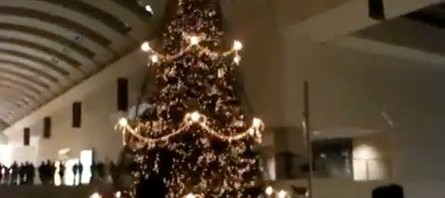
In the art exhibition there were a couple of things that stood out. The tree panel projection by Tokyo Wonder called Lights & Shadows (top video) was truly beautiful and well made.

The most exciting pice however was the Lumarca, a 3d volumetric projection on to strings. It’s made with Processing and the code is open source and downloadable through Google Code.

The VJs I met were Stuart J H Ward, a Canadian expat who has been living in Tokyo for few years and who’s very involved in the tokyo VJ scene. Stuart says the japanese VJ scene is pretty behind technically since many of them are using Motion Dive Tokyo and are bound of the limitations of that software.  Then I ran into Nicolas Guyon who is one of the two creators of a VJ application called AWI, Audio Wave Interaction. The last VJ I met Tu from Bangkok based B.O.R.E.D., a VJ crew who I mentioned earlier this year in my Duckunit article. I never met Tu before since he was in NYC studying at Parsons when I was in Bangkok interviewing his friends. Tu had a his short film “A film from underneath” showing at Siggraph.

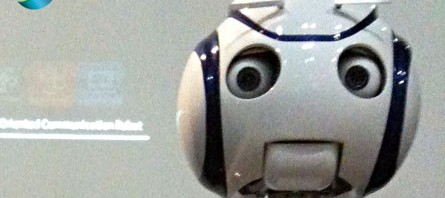
The rest of my Siggraph experience contained corny robots, an interactive sun rose and some pretty interesting physical computing gear from Microsoft Research in Cambridge which was kind of like the Arduino but without the soldering. And of course all the variations on touch screen and depth perception equipment that you can imagine (yawn!).

All eyes on: Leolyxxx

December 23, 2009

I’ve been mailing back and forth with my buddy Leo Hallin a.k.a. Leolyxxx during 2009. Leo is a talented illustrator who recently transfered in to the animation scene. He has done some remarkable animations together with fellow artist Finsta. Their animation “Bollen” has reached +15k hits on Vimeo. Leo has talked to me about using his animations for live visuals and he recently took one step closer by making this really nice loop for O-Baren, a popular Stockholm bar.

Even though he has a simple style, he has to work hard to create many clips. The way he makes them he could easily transcend from one clip to another with his own animated transition effects. His figure-ground work is also amazing. I’d love to see leo taking the plunge and mixing his animations live in 2010!

Check out Leo’s homepage.

Instant Broadcasting System

December 18, 2009

oskar-demo

Instant Broadcasting System is a software solution for receiving and mixing several video streams from cellphone cameras and broadcasting it live on a screen and/or to the internet. It’s an academic research project from Mobile Life in Stockholm under the lead of Ph.D student Arvid Engström. This project has been going on for about two years and I’ve been helping out on and off during these two years. The software has gone through a few name changes during the project. I’ve written about it here before under the names WeJ and Swarmcam.

The solution has two components – a Symbian application that is running on a Nokia N60 cellphone and a Max/MSP mixer application that is running on Mac Pro. During this demo we’ve been using 3 cellphones but the system can for sure do 8, probably up to 15. Each input takes a lot of CPU to process so you need a powerful computer to do it. The program has been tested on a MacBook Pro but it hits the ceiling pretty fast. And another problem with having many inputs is that it’s hard to overview all the preview windows. The cellphones streams the video over wifi or 3G to the computer. The resolution of the video is 320×240 at a top frame rate of 15fps. This isn’t very exciting but with Turbo 3G already here (in Sweden at least) and 4G at the doorstep we can expect much better image quality. Some new phones have a better codec for video compression which also gives better video quality. The software on the phones will be able to run on other Symbian enabled phones as well as the Androids. The iPhone has had it’s video functionality under lock, but since the recent release of the Bambuser app it seems like it would be possible to cover the iPhone too.

ibs-interface

The interface has gone over a huge overhaul and finally got some design to it. A quick run trough:

In the left column you have a preview window and output settings as well as audio settings, you can broadcast audio from one phone a the time.

The middle column is the home of the A and the B unit as well as the preview windows for each camera. You can see four preview windows but we were only using tree for this demo. Below are the image settings for the A and the B bus as well as a the “Backchannel” which is a system for communicating with each camera person. The A unit of the mixer hosts the cellphone camera streams. You switch stream with the number keys or by clicking the preview windows. The B side hosts the more artistic side; pre made clips from the video bank and loops (recorded from the live streams). You can crossfade between the A & B as well as mix them through blend modes.

The right column has the video bank on top and the loop module underneath. You can feature either the loop module or the video bank as well as mix them together with blend modes. A nice thing with the loop module is that it has a recording buffer. This means that when you hit rec, it actually starts the recording back in time making sure you don’t miss the action. The in and the out point of the loop can be adjusted and you can save the loops for later use.

The interface could be controlled by a midi controller. We have had the Novation Nocturn mapped for this demo.

So would I use this software for VJ-ing? No, not at the moment. It sure is an interesting technology but over wifi and 3G, the image quality just isn’t quite there yet. I am however very curious to see if Arvid will add more VJ features like beat matching and on-the-fly midi mapping.