VJs on the radio

So it’s time for VJs on the radio again. The Swedish radio show Ström (P2) has dedicated a whole show to the VJ scene. The interviews were carried out by Hanna “Knivflickan” Kihlander a few months ago and has now been edited together to a fabulous show with electronic music between the interviews. The show includes Linnea “Morrsken” Forslund, Joel Dittrich, Mikael “The Midi Thief” Wehner, Vidiots, and Nicolas Boritch from AntiVJ. All interviews are in Swedish except for the one with Nicolas Boritch.

Check out the homepage for the show and listen to the VJ episode. The audio stream is available 30 days after it first aired.

Syphon Recorder

The Syphon Recorder beta was released earlier this week. This is a new app in the Syphon family for OSX and it does exactly what it sounds like: it records video from any Syphon abled application and it also records sound from your source of choice.

So applications like VDMX that never had a recording function can now use Syphon Recorder to record the material straight to disk. I was doing tests using Soundflower to route music from Soundcloud playing in my browser into VDMX and recorded the whole session with Syphon Recorder without any hitches. And as an avid Modul8 user I’ve always been missing the option of recording sound with my visuals. In the next version of Modul8 that has Syphon support I will be able to use Syphon Recorder to record visuals and sound to disk.

But hold up… wait a minute. If you have ever used the Record to Disk function in Modul8, or just recorded any VJ session to disk in any VJ program , you know that it’s never a good idea to record to disk while reading video during a performance, it usually ends up with a lot of dropped frames and sad faces. So how are the Syphon guys handling this? I asked one of the creators, Tom “Bangnoise” Butterworth, how they handled this issue:

“We’ve worked hard to minimise the amount of work involved in recording, so you can get smooth video with the lowest possible impact on the rest of your system. Where possible, we use a custom shader to convert frames to 2vuy on the GPU, which halves the amount of data we have to move around and saves an expensive conversion stage during compression. We combine that with deferred-download of the data from the GPU and some careful threading and buffering to minimize the number of frames dropped due to system activity elsewhere.

During video playback you get constant spikes of disk activity while chunks of video are read – so if the disk is busy we accumulate frames until it’s ready to write again. Usually there is enough RAM available to easily handle this. We only drop frames if the data-rate of the compressed video is higher than your disk can keep up with – or if you are doing something involving heavy disk activity, such as performing a Time Machine backup or file-sharing, but hopefully you’re not doing either of those during performance.”

I just assume that faster processor, plenty of RAM, VRAM and fast disks like SSD would help this matter. Which of these things are most important, if any?

“Recording Apple Intermediate Codec onto an SSD, I can get ~60 FPS 1080 HD, but that’s with a fast processor and graphics card and with as little as possible else going on.

For the best performance, record to Apple Intermediate Codec, because it has a good balance of quality versus data-rate, and is fast to encode. For a lot of things you can get away with limiting the frame-rate to 30 FPS. A fast disk makes a big difference, especially for HD video. Never use a codec with alpha-channel support (Animation or “None”) if you don’t need the alpha-channel, as they slow every stage of recording down drastically.”

Edit: Syphon Recorder Beta 3 has been released. It restores audio recording on OSX 10.6.7 and adds support for ProRes codecs, etc.

.

Must-see lecture/discussion in Stockholm

[vimeo width=”445″ height=”167″]http://vimeo.com/11768737[/vimeo]

This is a must-see lecture/discussion in the series From another point of view about the moving image with Torben Meier, Daniel Bergmann and Quayola.

Time: Tuesday 5.30 – 8.00 pm
Place:
Iaspis, Projektrummet, Iaspis, Konstnärsnämnden, Maria skolgata 83, 2 tr, Stockholm
Date: 15th of February 2011.
Language: English
Price: Free but bring 60 sek for food.
Link: Show & Tell

The last Kolla!-talk contains of three lectures from the members in the jury of moving image. Followed by questions from the audience. Arranged in collaboration with Kolla! by Svenska Tecknare/The Swedish Association for Graphic Designers and Illustrators and Iaspis, The Swedish Arts Grants Committees’ International Programme for practitioners within art, craft and design.

Real-time motion tracking with Isadora + Kinect

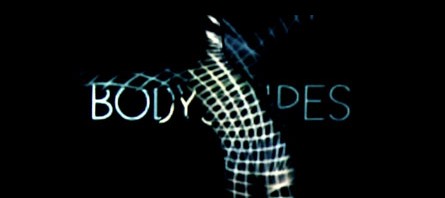
We did a similar experiment when the Swedish VJ Union gathered for our January Tech Show & Tell session. It wasn’t as advanced and beautiful as this experiment and we had no naked volunteers. It’s important to have the Kinect shooting straight at the object or it will get tricky matching up the video image. This experiment called Bodyscapes by AfterMe is using Isadora together with the Kinect. Via vj_emtv.

iMixHD 1.0 is here

[vimeo width=”445″ height=”250″]http://vimeo.com/19587577[/vimeo]

The first version of iMixHD by VJ Fader and VJ Leo has just been released. This software controls the TvOne 1t-c2-750 dvi mixer that we have been raving so much here on the blog. We were lucky to try the beta which had pretty limited functionality and now the guys have added some more controls.

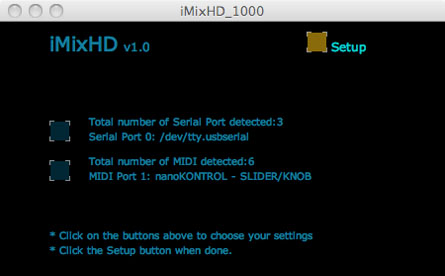
When you launch the program you get the setup screen. The only two things you need to select in the serial port (you will need a USB to RS232 serial adapter to connect to the TvOne unit) and the Midi device. When you uncheck the Setup button you will get to the main screen.

The first thing I notice is that they have turned the order of the midi mapping right (touch the controller in the software first, then the controller on the midi device). In the upper right corner there’s an option to lock the buttons on the TvOne unit’s front panel. That saves you from trouble if you tend to or if you are just a bit clumsy. The second set of buttons are for selecting the inputs for the two channels. RGB1 and RBB2 are the video sources and TC1 and TC2 are images that you can store on the TvOne unit (you will need the Corio Tools software that runs on Windows to transfer images to the machine). Underneath you have the faders and cut buttons or channel A and B. I had a bit of difficulty to map the cut buttons to my Korg Nano Kontrol but if you use the Korg Kontrol Editor software you can change the buttons you want to use for cutting Control Change to Note. I am not super keen on the user interface of iMixHD but I know it’s a bit tricky making good conventional UIs in Processing.

It works great fading one channel at the time but if you start sliding both faders they tend to stutter or one will get stuck. There is a known problem with sending too much data to the TVOne unit at the same time.

I know that there are a few more thing that you can control but that hasn’t made it in to this version of iMixHD like luma keying and setting of the resolution so that you don’t have to bother with using the buttons on the TvOne unit and it’s lousy on screen display.

iMixHD is available for Mac and PC and is also available as Processing source code. You can download them all here:

Info: www.neuromixer.com/imixhd
Download: code.google.com/p/imixhd/downloads/list


Previous posts written about the dvi-mixer.


The DVI mixer revisited

Many of you have heard of the *Spark D-Fuser DVI mixer project by Toby Harris. It’s based on a DVI scaler from TV-One with the (sexy) name 1T-C2-750 that allows you to mix video from two computers in HD resolution. Toby has been working on a hardware companion for this unit that adds a crossfader, fade to black knob and with some firmware tweaks gives plug and play support for the DualHead2go and the TripleHead2Go devices among a few other things. Due to a hectic schedule and the sheer amount of time it takes to do hardware development, this project has taken a while.

During this time VJ Forums administrator Sleepytom has been very sceptic against Toby’s project claiming that the only addition you’ll need could be done with software, encouraging people to experiment themselves. And recently VJ Fader a.k.a. James Cu (the maker of A/V Mixer) and VJ Leo a.k.a. Leonardo Fernandes Schenkel, announced that they are about to release iMixHD which is an app for Mac & PC built in Processing that controls the 1t-c2-750. VJ Fader claims that he will provide the Processing source code. This release sparked a thread on VJForums. Vade (Anton Marini, one of the men behind Syphon) also announced a Quartz Composer plugin that he has developed together with Toby that controls the DVI-mixer. The VJ forums thread went ugly for a little while but then settled when the main actors decided to share code and knowledge with each other and the public instead of arguing.

Is there still a reason to get Toby’s hardware add-on? Let me tell you like this: I’ve been using the 1T-C2-750 for a few weeks now and I’ve been configuring the unit with instructions from Toby to add the dh2go/th2go resolutions as well as some other settings. It’s easiest done with a Windows program (and for the record I’m a Mac guy, so it’s a little bit more hassle since I have to switch OS). Between Toby’s D-Fuser controller and some firmware tweaks to the TV-One all the correct settings should be there so the only thing you need to worry about is plugging in to the mixer and start mixing.

I had the opportunity to try a beta of the iMixHD software. It only had the functionality shown the video that was published on VJ Forums in January, which was the abilities to to MIDI map the cut buttons and the faders for video source 1 and 2. The app worked very well when I tried it with a Korg Nano Kontrol but the mapping process was a little bit backwards. The big question is what additional control over the t1-c2-750 this software will get and if it will plug’n’play without any further configuration.

So when will Toby’s D-Fuser mixer be available? The short answer is not yet. The initial D-Fuser prototype was using an Arduino clone with RS232 connector rather than USB. The company behind that Arduino clone then ran out of stock and didn’t reply to the approach about making up more boards or taking on manufacture of the whole controller. Toby then took help from Arduino veteran Shawn Bonkowski to turn the controller into a finished product. The controller based on the open-source Arduino PCB files was shown in Berlin in May. But apparently there were errors in the Arduino PCB files that were causing problems – for instance that prototype never sucessfully updated its firmware via USB as an Ardiuno should – and adding features to that unreliable base was making the development even more delayed. At some point the Mbed, an “Arduino on steriods” , showed up on the market offering new possibilities and promising to have all the tricky stuff on its board already, and so a clean start with this has been made. So to my understanding, as soon as the mBed based PCB arrives back for testing, they will be ready to go in to production.

Toby states further: “It’s pretty obvious I/we/Shawn never imagined the *spark d-fuser project could be this delayed, and I really don’t want to have inadvertently stopped anybody from similar home-brew efforts like the original prototype made for the D-Fuse performances. I figured if anyone wanted such a thing bad enough and were capable of figuring out either how to live with the OSD or do the rs232 themselves, they’d just go ahead and do it; I didn’t exactly keep the model a state secret. The all-along decision of not telling everybody just to run out and buy a TV-One and control it via software / their own Arduino setup was based on not wanting there to be a whole wave of units out there stuck without the custom firmware needed to make them plug’n’play and work with the hardware controller. Part of this is I didn’t want any fallout from early adopters getting screwed, and yep part of it was wanting TV-One to get a big order for their units and realise we were a market worth catering for. The interesting recent development is that we might not need the custom firmware I spec’d way back to get the plug’n’play behaviour, but I’m having to reverse engineer some RS232 communication to figure this out. We’ll see, fingers crossed”.


Previous posts written about the dvi-mixer.


Transfett joins the union

[vimeo width=”445″ height=”250″]http://vimeo.com/17449557[/vimeo]

We’re proud to welcome Transfett to the Swedish VJ Union. Together with KubKub they are the Swedish VJ Union’s representation in south Sweden. You might have seen the Mille’s “Crysteena” video that has been circling the net the last few weeks – that’s some splendid video mapping singed by Transfett.