New mapping module for Modul8

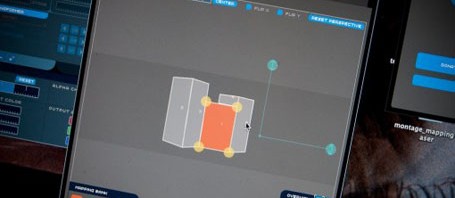
The French Iduun collective has finally released their eagerly awaited mapping module “MapMapMap” for Modul8. This module helps you with the perspective transformation, rotation of placements of layers as well as other useful functionality. Have a look at the documentation:

www.iduun.com/blog/2010/09/12/the-module-is-there-mapmapmap/

www.anomes.com/site/sticky/mapmapmap/

As a module maker myself, I must say that the Iduun collective makes some of the most interesting modules and they use techniques you don’t really know are possible to achieve within Modul8. If you’re in to Modul8, Python and module making be sure to look and learn from their code.

VJ Union Summer holiday

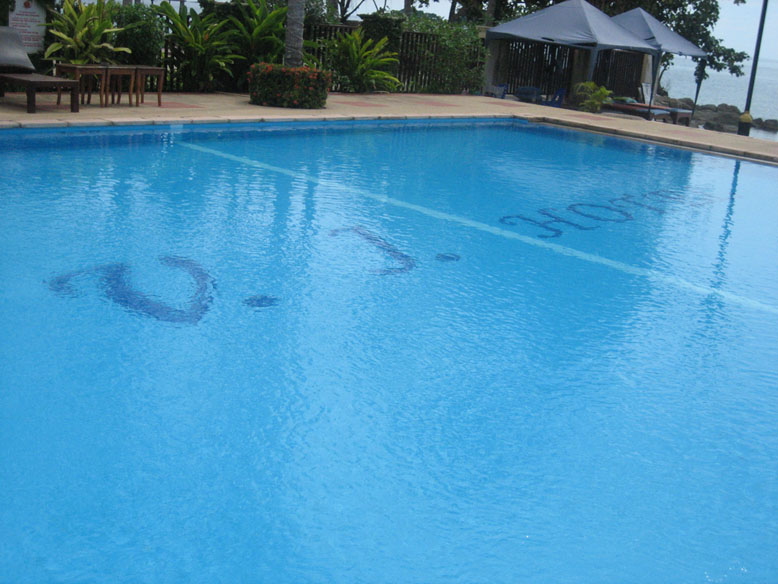
VJ Hotel sign

Summertime in Sweden means less VJ-ing. We’re recovering from the dark winter by enjoying the sunlight. However, we’ve seen an increase in VJ activity in late spring / early summer the last two years which is a good thing. VJ-ing used to be centered around the dark parts of the year over here.

VJ Hotel Pool

The Swedish VJ Union writers will take some time off to recharge the batteries. But who knows, maybe some of us can’t keep away from the keyboard despite the massive heat wave? Subscribe to our RSS feed to be sure to not miss when the next post hits the net.

By the end of the summer we will start reorganizing the site a little bit to get a better structure and some more functionality. We’ll also introduce a new interview format where you will meet interesting people from the world of VJ-ing and related fields.

The Volt 2010 festival report

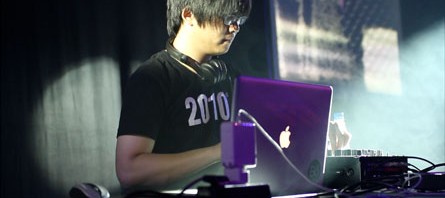
B6, DJ/Producer

B6, DJ/Producer

The Volt crew came back with yet another festival at the concert hall in Uppsala. I recognized a lot of faces from last year. It feels like Volt only invites their friends to perform, but with friends like these, who could blame them? And if it wasn’t for the friendship, we wouldn’t be there either.

The VJ line up was actually pretty much identical to last year. Me (The Midi Thief) and Ben (Synthetics) from Instructions, Morrsken, Lysbang and the Vidiots, Joel Dittrich and Martin Söderblom. The Field had brought their own VJ, Victor Tarre, who did wonderful visuals for The Field‘s live set.

There was a part in Tarre’s visuals that looked like they were parts of a music video. It was made with few clips but cut in a very neat way. I got hold of Victor Tarre and asked him a few questions about his techniques and work process.

TMT = Me/The Midi Thief, VT = Victor Tarre

TMT: Is this material from a music video?

VT: The idea comes from an early draft of a music video for the Field that was never finished. Originally I thought of using the studio footage and the outdoors footage with 50% opacity composed on top of each other to create the feeling of “a giant” that uses buildings and things as instruments. This technique has been used in many movies before special effects, 3D and tracking was invented. The technique is based on having a lot of contrast in size between the two clips that are matched against each other. For example, a book could become a container, a cassette tape could be a car on a street, a bridge could be a harp.

When the footage had been filmed and captured we realized that it was a bit slow and boring having these clips multiplied on top of each other. Axel’s (The Field) music is not at all boring, rather funky and danceable. The music is built up by fragment and to use the same fragment approach on the movie clips seemed to work out great.
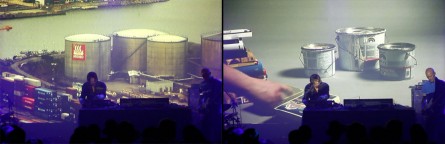
Victor Tarre's visuals for The Fiedl

A display of Victor Tarre’s techniques

TMT: First I didn’t realize that it was live visuals. It was so tight that I thought it was triggered from Ableton Live over MIDI sync. Also because of the few clips used, it seemed unnecessary to use a VJ. So I was surprised when Axel told me that your were mixing it live. Could you tell us about how you synced up with Axel and what hardware and software you were using?

VT: I use software from the stone age called Wirecast that is made for editing live television. The program is really simple but since I only have film clips and never use graphics or typography interactively during the performances, Wirecast does it’s job. The synchronization is an illusion. The brain wants to put images together with sound and since it’s a pretty intensive play with perspectives or brains will fix the rest. But of course, I have different speeds that I know works when the clips work together the music’s BPM.

Me and Ben were happy to have received the evening’s prime spot, The Le Petit Orb live set, a streamlined version of the legendary British The Orb. Graphically we were more in sync than ever and we were really pleased with how the evening turned out. You can read more about the gig on our blog, www.instructions.se

Martin & Joel did a marathon set in one of the DJ rooms. I stopped by during the Chinese DJ act B6 and it both looked and sounded great. They had talked to B6 before the gig and decided on an abstract theme. The Vidiots were doing visuals for Shinedoe, a female Dutch DJ and remix artist. They had left their midi controllers at home but luckily we cold lend them ours which I think are the exact same ones as they usually use. It took a little while for the boys to get into the groove but once they did they delivered a potpourri of great Vidiots VJ classics. I didn’t get to see Lysbang’s nor Morrsken’s sets but it’s always a pleasure to meet them.

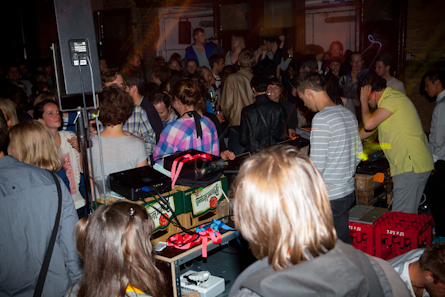
Vidiots, visuals for Shinedoe

The Vidiots visuals for Shinedoe

The night ended up with a VJ/DJ Sandwich party (oh no, not THAT kind of sandwich…) in the hotel lobby. We had Gabba techno girl Funky Tuna, techno legend Håkan Lidbo, Shinedoe, me, Ben, Joel Dittrich and a sleeping Martin Söderblom. Pretty cheerful crowd that no outsider could break into and believe me there were attempts. There was this strange fellow that showed up. Picture this: A middle aged man, kind of buff in sweat pants and a yellow busy Ed Hardy t-shirt, eye shadow and a plate of french fries. He started rambling about having 4 mille alcohol in his blood and having to leave his Porsche (stuffed with no less than four Fender Stratocasters) around the corner. He also claimed to have been bitten by a cobra about a week earlier and he had a red swollen leg to show for it. None of us had any muster left to deal with this guy so he wandered off to the hotel shop and started stealing ladies underwear (at least that’s what it looked like because I… that’s what it looked like).
VJ Festival – call for entries

VJ Festival Erlangen

It might not be the perfect timing to promote another German VJ festival but I just got a message from Norbert at the VJ Festival in Erlangen, close to Nürnberg in southern Germany. It’s organized by the FETE crew (Freunde Elektronischer Tanzmusik Erlangen) and it’s their first festival. You will find the call for entries at their website.

I’ve been to Erlangen myself a few times and I can recommend the city. I don’t have a clue about the quality of VJing in Erlangen but let’s find out!

An open letter to the organization of Visual Berlin Festival

We choose to write this as an open letter instead of as a regular e-mail. We do it to show a really bad example of an arrangement. We do it in hope that this was a one time coincidence. And if not, that change will be made in the future.

Together with a whole bunch of other VJ’s we’re supposed to perform at Visual Berlin Festival closing party, a party that was held in collaboration with DMY International Design Festival Berlin. We arrived in Berlin on Friday. No one from the organization was there to meet us. That’s really not a big issue since we only had as much tech as we could carry. After getting to the hotel we went straight to Tresor. Getting the accreditation was no problem, but we had now been in Berlin for quite a while and still no one from the organization had tried to contact us to see that we were in town. The fact that this was a DIY festival started to get more and more clear.

It is now Saturday, the last day of the festival. It is the day of the closing party. During the whole day no one had contacted us about the evening. Now we started to actively hunt for answers. We had a paper with names of people and their telephone numbers, people who we started calling to get some answers. Finally we got hold of a person who told us that we could check the tech at around 7 p.m. The party was about to start at 00 a.m. so that was ok. The festival had now moved from Tresor to Collegium Hungaricum Berlin, but the closing party was going to be held at Picknick Club. We arrived at the Picknick Club around 7.30 p.m. The only one there was the clubs own technician, only responsible for setting up the bar/sound and preparing the yard for the evening party. He was really stressed up about the people from Visual Berlin not being there. He had no knowledge, not the responsibility to set up the projectors and screens. We called the person from the organization, asking what’s up. They was still at Collegium Hungaricum. We wasn’t surprised since none of the workshops we had been to during the weekend had been on time. Since the place wasn’t far away from Picknick Club we went over there to get some answers. We got told that the person who was supposed to be in charge over the technical stuff was to tired after the weekend and had to leave the responsibility to another person, which was the one we were talking to now. He told us that, “I should have been at Picknick five hours ago, but have not had the time to”. He said to us that he would head over there right away, and that we should come back one hour before the party started.

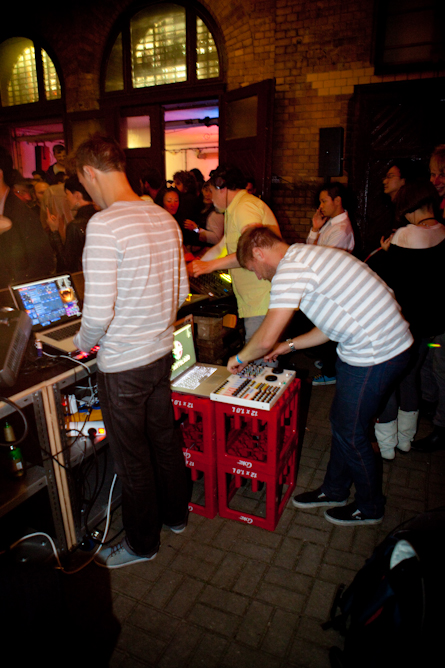
Due to miss match in the U-bahn we arrived at Picknick Club at 11.30 p.m. The line outside was long and a huge amount of people had already got in, the party was in full bloom inside. When we reached the yard where the main visuals was going to be, we were met by a handful of the evenings VJ’s hard struggling with getting everything going. No one had been there to set up the screens or the projectors. There were no switch, no power supply. Nothing. They had, as we, arrived just before the party was supposed to start. On two beer crates (placed on the table, taking up huge work space) they had managed to pile three projectors on each other. Just to get something up. We always bring a Kramer switch with us and thanks to that we could switch between the computers. We also have to many cables with us that now came in handy. Thanks to all VJ’s hard work (except my own, I was just furious) everything was up and running at around 00.30 a.m. It looked like crap, but no one other than MacGyver could have done anything more/better with what we had to work with. Since there was no one from the organization there, we had no one who could give us drink tickets. I paid 3€ for a Coca Cola. Yei.

<br />

At 00.57 a.m. (I checked the watch). One of the VJ’s called the person we talked to earlier at Collegium Hungaricum Berlin. To see what was going on. He got the answer that they had decided to keep the party over there. Read it again. They decided to keep the party OVER THERE. And they tell us this now. But we were very welcome if we wanted to come over. Oh, how nice. Or, if we wanted to, we could just stay at the party at Picknick. I got so upset over the ignorance that they showed us that I didn’t know where I would go.

Since there was no work space left on the table only two computers could fit. So I gladly handed over the responsibility for the nights performance to Dan and Daniel. They did the best of the situation. Until the club owner came down. Our table stood right next to the DJ table. And the DJ demanded more space. So we had to move our stuff. The club owner decided that two crates on the ground would be good enough for a VJ to be working on. That was it. The time was around 4 a.m. There was still two-three hours left of the party. But all of us VJ’s decided that it was enough. We shut down the projectors, the place went totally black. We packed our bags and left the place.

<p></p>

We don’t expect any apologies. We just want to let you know how disappointed we are. We are disgusted by the ignorance you showed us, your guests. We are disappointed over the fact that we as artists puts down a great amount of money and get nothing but humiliation in return. It makes us sad, sad to see how a collective of VJ’s can act this way towards other VJ’s. If it would have been just regular people I could understand it somehow. But we are professionals, fighting for acknowledgement in the same hard, dark and poor branch. What the fuck? Is it supposed to be this way?

Not everything was as bad as it sounds tough. Visual Berlin had gathered a large number of international VJ’s and interesting lectures/workshops were held during the weekend. Tons of tongue twisting geek talk was exchanged. It was a nice spread of installations and club performances. Berlin with one of the best club scenes/culture in the world offers a perfect spot for artist from cross platforms to meet each other and exchange ideas. And Tresor must be the ultimate place to do this at.

Well aware of the fact that the organization didn’t have any money to pay for travels of performances, we applied to this festival. All together we spent about 1 000€ on this trip (travel, transportation, living).

Lucky us that Berlin is the most awesome city in the world.

Sincerely //Startsladd

The *spark d-fuser DVI mixer is coming closer

*spark d-fuser mixer. Photo by Andreas Apelqvist

Toby Harris a.k.a. Toby *spark did a presentation of his first manufacturable prototype at the Visual Berlin festival. He just finished editing a video from the presentations that contains a few revelations:

  1. The unit will have a fade curve control so that you can mix from a flat blend to a flat add.
  2. It will be ethernet enabled so that you can use several d-fuser mixers in master / slave mode. It also makes it possible to write a OSC library for the unit.
  3. It has a screen and a menu.
  4. The unit’s software is open source and will be available on line as soon as the mixer is released. This makes it possible to add more functionality to the mixer.

There are still a few things to do before the mixer goes in to production so there is still no release date yet, but “soon” toby says. Regarding the pricing it seems like he is still on track, to quote Toby: “£750/$1000 is very much the plan. If you budget for that, I think we will be in a good place, you might even get a surprise”. So the pig is out of the sack, now lets anxiously wait and tap our fingers…

Link to Toby’s original post. Video by Pedro, photo by Andreas Apelqvist.

Swedish techno legend teams up with design school

[youtube width=”445″ height=”250″]http://www.youtube.com/watch?v=3VQmbmHw0r4[/youtube]

The Swedish techno legend, Håkan Lidbo, has teamed up Berghs School of Communication. The students were given one track each to make a visual interpretation. The most significant audio elements in the music should have  a visual counterpart and they should synch together. The project has been collected on a DVD that you can buy from Håkan’s web site. A release party will be held tomorrow night (Wednesday june 16) at the notorious 2:35.1 night club at Berns in Stockholm. Watch more examples at Håkan’s web site.

Video by Philip Cronerud & Richard Feldeus

An interview with Aalto from AntiVJ

I got hold of Romain Tardy a.k.a. Aalto from AntiVJ and asked him a few questions about their latest mapping project at  Visualiseringscenter C in Norrköping, Sweden.


How much time did you spend on the mapping project in Norrköping and much time was spent working on site / off site?

From the very start of the discussions about this project to its final result, I think it was 3 months. We went to Norrköping to see the place in march, then we spent 2 days on site to do the mapping at the end of April, then we went back home to work on the content for 3 weeks, then back in Norrköping for 4 days to do the final tests and play the piece.
To precise things, I’d say we didn’t have any pre-produced content before we saw the site for the first time. We created everything from scratch, after we saw the place.

Could you break down your process in a few sentences, from idea to the final projection?

It’s always hard to describe precisely the work process, however, the building and its surroundings are always the starting point. We got inspired by the industrial past of the city, and, of course, by the new function of the building: the visualization center. How could we make these two elements meet each other?
We decided that I would be the director on this project, so I started to write a “scenario”, using the notion of labour as the central point of the story, taking both elements of its past (the notion of labour found in the textile industry, also visible in the nearby museum of work) and of its future – a visualization center – also questioning the relationship between intangible and practical work, statistics and factual, labour and its finality, which are all very current questions about our dematerializating world.
As we’re several people to work on the project, I drew a story-board so everyone can refer to the same document. As we work remotely, we meet every 2 days on Skype to see how things going.
Once all the content is done, I worked on the final editing – the actual piece the public sees.

What software do you use while creating and projecting your video mappings?

For this project, Simon Geilfus from our team created a new software so we can use some audio-reactive content based on vector graphics we designed. This software was used in the 1st part of the show. In addition, we used more traditional tools like After Effects, Illustrator, Cinema 4D.

What projectors are you using, how many and what hardware are you using to distribute the video signals to the projectors?

For this project, we used 2 Barco XLM HD30, that are 30K lumens projectors, outputting up to 2K resolution images. We didn’t use 2K resolution, but 1080p FullHD. For playback, we used Dataton’s Watchout hard/software, that is the easiest way to synchronize several projectors and have a smooth playback at such resolution.
The projectors can differ depending on the project. In Norrköping, the projectors were quite far from the building (on the other side of the river) so we needed pretty big ones. For closer projections/smaller buildings, 12 to 20k lumens projectors can be bright enough (also depending on the surroundings, public lights etc.)

Ok, this tech thing is going overboard, but what computers are you using?

Haha, this one’s going too far 😀
For production and rendering in After Effects, Illustrator, C4D etc., we use Mac Pro’s (I you really wanna go geek, mine is a 4-core Nehalem with 8go RAM). By the way, Adobe CS5 is a must, working in 64bit on Mac Pro stations – it really improves rendering time and workflow in a general way using the total amount of RAM.
For Simon’s software, a Dual-Core DELL laptop was good enough (geek bonus: a PC running OSX…)

With your setup for video mapping – is it possible to mix content live (VJ-ing) or does everything need to be rendered and synchronized with the music in advance?

With the Watchout system, it’s possible to use live feeds from an external source. To do so, the Watchout must have the optional HD-SDI card installed, so it can take any input.
That said, I’ve never used it, and and I guess it’s a pretty big setup just for VJing. There’s an alpha version of a “mapping” module for Modul8 (made by some French guys as well) that would probably do the job too.